Industrial-grade network interfaces bridging field instruments to supervisory controllers, optimized for complex communication environments.
In modern industrial process control, system interoperability remains one of the largest engineering hurdles. The industrial district of Takamaka—representing localized remote operations requiring decentralized power, smart utility monitoring, and specialized production facilities—stands as a prime example of where vintage field instruments must communicate reliably with modern, IP-based SCADA systems. Typically characterized by distributed physical architectures, remote telemetry sites, and harsh environmental profiles, installations in the Takamaka region demand protocol converters that are robust, highly isolated, and configured with dynamic diagnostic protocols.
Historically, field devices in process plants rely on analog signals like 4-20mA loops overlaid with the Highway Addressable Remote Transducer (HART) protocol. However, modern plant control architectures use digital pipelines such as Modbus RTU, Modbus TCP, and Ethernet-APL to carry multivariable data back to cloud-based analytics engines. By implementing highly specialized converter factories and engineering frameworks designed for the Takamaka market, companies can seamlessly unlock diagnostic data from legacy transmitters, optimizing preventative maintenance cycles and minimizing downtime.
The Takamaka market features a unique combination of coastal environments, localized manufacturing, and off-grid utility systems. Water purification, desalination networks, small-scale power plants, and chemical dosing facilities form the backbone of local industry. These applications require continuous monitoring of variables such as pH, flow rate, pressure, and turbidity. While field instrumentation is often robust enough to withstand the marine climate, transmitting this data across distances without signal degradation represents a classic engineering bottleneck.
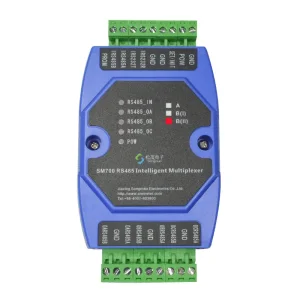
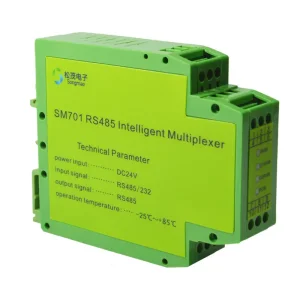
Unshielded or poorly isolated serial lines in coastal regions are particularly vulnerable to ground potential differences and inductive lightning strikes. Standard RS485 links without multi-channel routing can fail catastrophically under these conditions. The deployment of multi-channel converters—such as the SM701-A (B) MODBUS 1-in-3-out distributor—provides physical galvanic isolation between segments, ensuring that a fault on a single branch does not interrupt communications across the entire network. This is critical for regional SCADA topologies where field technician deployment times are high.
On a global scale, the industrial sector is shifting towards the Industrial Internet of Things (IIoT). This transformation is not about replacing every analog instrument with a smart Ethernet device; doing so would be cost-prohibitive. Instead, the global market relies heavily on protocol translation gateways to extract digital HART variables from 4-20mA instrumentation and map them to Modbus, Profibus, or OPC UA systems. By converting legacy analog loops to digital networks, operators gain access to secondary and tertiary device parameters, such as sensor temperature, diagnostics, and calibration states.
This hybrid approach protects capital investment in field devices while allowing facilities to leverage advanced predictive maintenance algorithms. Global standard organizations, such as the Fieldcomm Group, emphasize the role of HART-to-Modbus gateways in bridging this technology gap. Reliable converter factories ensure that these devices comply with international electromagnetic compatibility (EMC) standards, offering long-term reliability in electrically noisy substation and petrochemical environments.
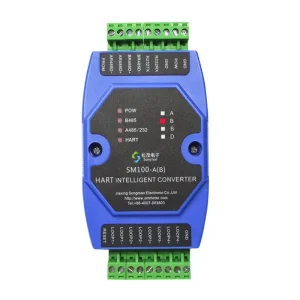
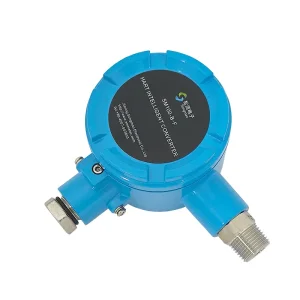
To successfully integrate old and new standards, it is vital to understand the signaling layers. The HART protocol uses Frequency Shift Keying (FSK) to superimpose digital data on top of a standard 4-20mA analog loop. This FSK signal is decoded by high-speed modems embedded within gateways like the SM100-B-F. Once decoded, the raw sensor data must be formatted into standard Modbus registers, which can then be read by PLC and RTU controllers via serial (RS485) or Ethernet (Modbus TCP) cables.
| Feature Parameter | Legacy Loop (HART / 4-20mA) | Digital Bus (Modbus RTU / TCP) | Songmao Converter Interface Capabilities |
|---|---|---|---|
| Signal Medium | Analog current loop + AC voltage FSK | Differential RS485 / Twisted Pair Ethernet | Galvanically isolated physical layers, up to 1.5kV |
| Multivariable Access | Primary variable only (analog); up to 4 (digital HART) | Virtually unlimited registry access | Simultaneous polling of secondary/tertiary variables |
| Transmission Distance | Limited by loop resistance and EMI noise | Up to 1200m (RS485); global reach via TCP gateways | Multi-channel hubs and active signal amplification |
| Diagnostic Capabilities | Basic loop failure, no sensor diagnostics | Full sensor status register readouts | Real-time device status alerts and loop health reports |
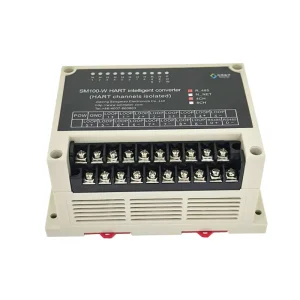
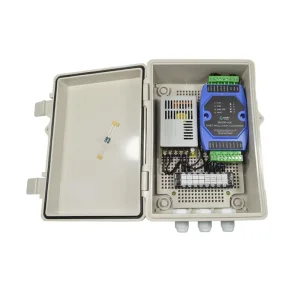
Our research indicates that combining multiple HART channels into a single Modbus-TCP gateway significantly simplifies local control configurations. Devices like the SM100-W 8-channel gateway allow systems integrators in the Takamaka market to reduce wiring overhead by routing up to eight field loops to a single point. This reduces both the structural footprint in control cabinets and the cost per channel, delivering high ROI for decentralized installations.
Jiaxing Songmao Electronics Co., Ltd., founded in 2007, is a technology-driven manufacturing enterprise specializing in protocol translation and digital communications. For over 18 years, we have been at the forefront of industrial automation, engineering reliable HART protocol interfaces, RS485 distribution modules, and custom telemetry data loggers.
Our solutions are used globally in challenging environments where reliability is non-negotiable. With our focus on technical innovation, precision manufacturing, and professional support, we continue to engineer specialized products that meet the operational demands of localized markets worldwide, including the municipal, energy, and process industries in the Takamaka region.
Engineered to deliver stability and precise protocol conversion in complex operational zones.





As the industrial automation sector continues its transition toward cloud connectivity, protocol converters must handle more than simple data mapping. The modern expectation is for converters to act as smart edge gateways. This paradigm shift requires integrating local buffering, cybersecurity protection (such as device-level encryption), and edge-based MQTT protocols to publish data directly to regional servers without intermediate PLCs.
For the Takamaka market, the technology roadmap for the next decade centers around three core pillars:
Songmao Electronics is committed to this roadmap. Our R&D efforts are currently focused on embedding dual-core processing units within our gateways, which allows for simultaneous polling of multiple communication interfaces without latency buildup. This is especially useful for high-node systems that require fast response times under heavy traffic loads.
A comprehensive range of high-isolation converters, remote collectors, and protocol gateways engineered for industrial environments.
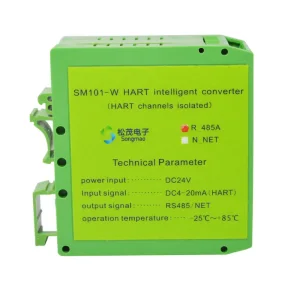
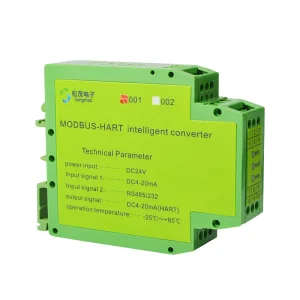
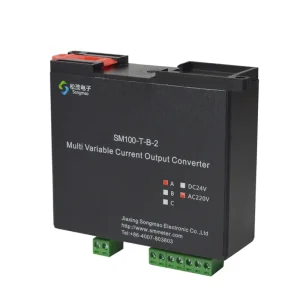
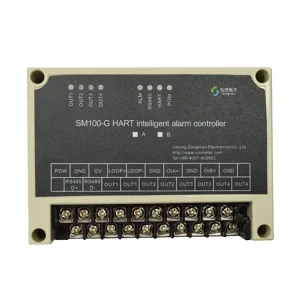
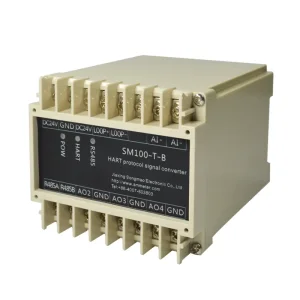
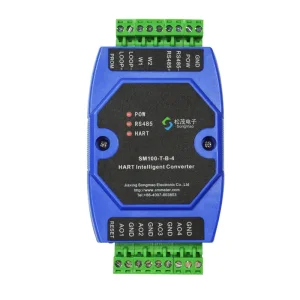
Preserved inventory products engineered for specific plant protocols and serial line isolation requirements.
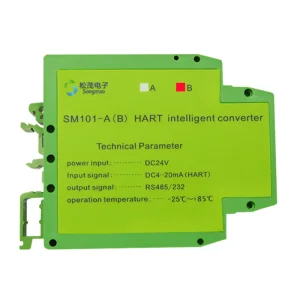
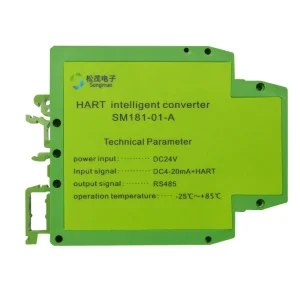
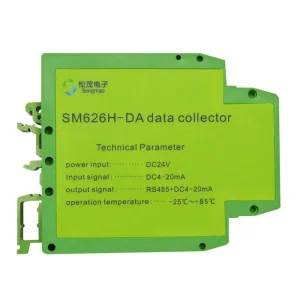
Technical answers to common deployment challenges in remote and localized industrial telemetry networks.
Need custom serial interfaces, multi-channel distributors, or high-density HART gateway solutions for your industrial project? Contact us today to receive customized technical support, detailed product datasheets, and wholesale factory pricing.
Send Inquiry Now